
Charles R. Goulding and Preeti Sulibhavi peel back the curtain on Boeing’s unannounced 737 MAX successor—and how Rolls-Royce’s additive manufacturing muscle may quietly define its engine.
Introduction & News Context
On September 30, 2025, the Wall Street Journal ran a front-page story revealing that Boeing has quietly begun early-stage development of a new single-aisle aircraft intended to eventually succeed the 737 MAX. The report, based on sources familiar with the matter, suggests that Boeing CEO Kelly Ortberg met with Rolls-Royce leadership earlier this year to explore engine options for the new design. While Boeing has not formally announced a program, the move signals its intention to reenter a clean-sheet narrowbody race—something it shelved a decade ago in favor of reengining the 737 as the MAX.
One development that is clearly making Boeing more confident is a recent influx of several new, larger orders. Additionally, Boeing’s acquisition of Spirit AeroSystems in July 2024 for approximately US$4.7 billion (all-stock transaction) is a pivotal move in that it was aimed at regaining control over its supply chain, improving its quality control, and stabilizing its 737 MAX program.
But Boeing remains cautious: the company still faces regulatory and production challenges tied to the MAX, and it is prioritizing backlog fulfillment and certification of derivative models. But the early stirrings of a successor program, coupled with Rolls-Royce talks, have grabbed the attention of industry watchers, particularly around propulsion and manufacturing innovations.
In this article, we dive into what is currently known about Boeing’s successor, Rolls-Royce’s engine ambitions (notably UltraFan), and how additive manufacturing may play a critical role in making that future jet competitive.
What We Know So Far: The Successor Concept
Because Boeing has not yet released a press announcement or program reveal, what we know is largely speculative, drawn from media reporting, supplier leaks, and industry analysis. Some key themes emerge:
- Boeing is pursuing a clean sheet narrowbody, not a re-engineering of the 737 frame.
- The company is designing a new flight deck architecture likely decoupled from the legacy 737 cockpit lineage, aiming for more modern avionics and pilot commonality with Boeing’s broader fleet.
- Talks with Rolls-Royce indicate Boeing is evaluating a shift away from its decades-long reliance on CFM International (GE + Safran) engines for the narrowbody line.
- No formal contract or official adoption has been confirmed.
- Analysts speculate that entry into service might land in the mid-2030s, aligning with when Airbus expects its own next-gen narrowbody.
- The economic, regulatory, and technical risks are steep; Boeing must surmount backlog, certification scrutiny, and investor confidence challenges ahead of committing billions to a new airframe.
In sum: Boeing appears to be in the study-and-concept phase, laying groundwork and exploring options rather than committing to a full-scale program—yet the early engagement with Rolls-Royce is a notable signal of intent.
Despite media buzz, Boeing says it remains “focused on nearer-term recovery efforts” and will only commit to a new jet when conditions are advantageous. With that in mind, Rolls-Royce intends to run two variants of UltraFan: one for widebodies and one scaled-down for narrowbodies (named UltraFan 30) by 2028, with anticipated flight tests later in the decade.
The narrowbody version may push a fan diameter “bigger than current narrowbody engines,” possibly near 90 inches, with thrust in the “right ballpark” (~30,000+ lbf). Rolls-Royce is pushing the bypass ratio toward ~15:1 (versus ~10–12:1 for current geared-fan designs).
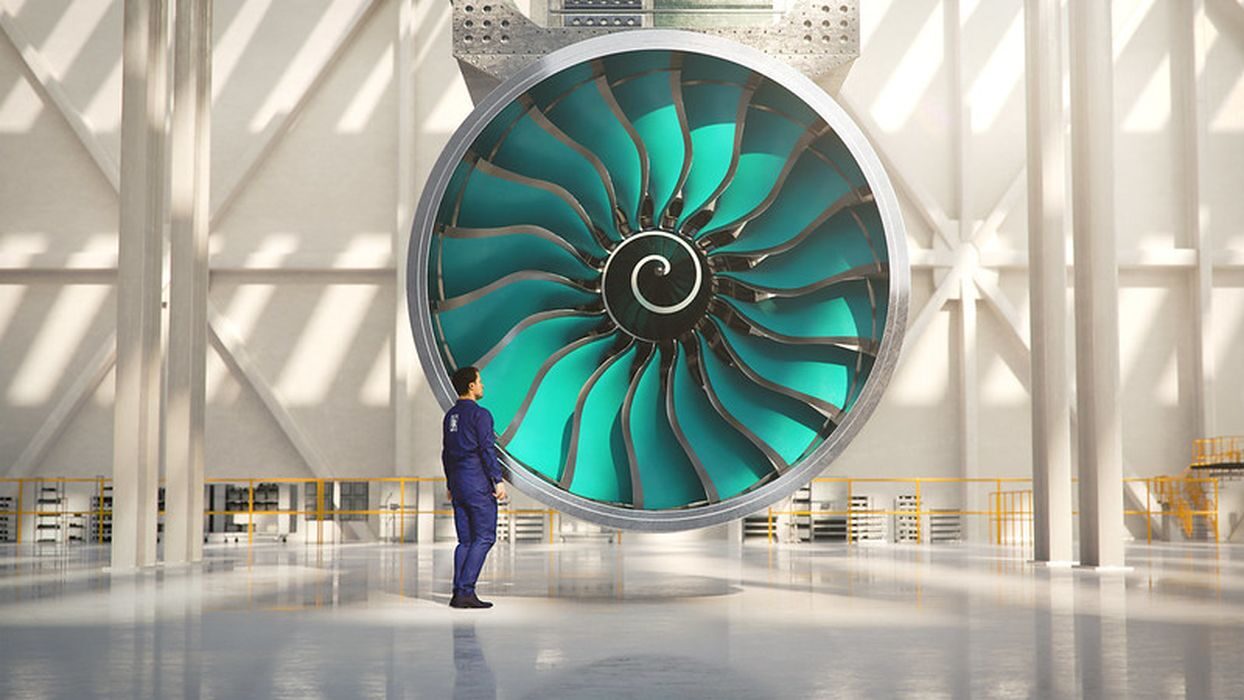
Rolls-Royce & The MTC established a pre-production facility using Electron Beam Melting (EBM) to produce Engine Section Stator (ESS) components for UltraFan. They produced ~240 parts with full traceability and deployed six EBM machines (Ti6Al4V). ITP Aero (a Rolls-Royce partner) has 3D printed the Tail Bearing Housing (TBH) for the UltraFan demonstrator, using Selective Laser Melting (SLM). The design includes removable sound-attenuation panels (also 3D printed), yielding noise-power reduction of ~50 %. The UltraFan demonstrator engine already comprises tens of thousands of separate parts – additive techniques have been used in test-bed systems.
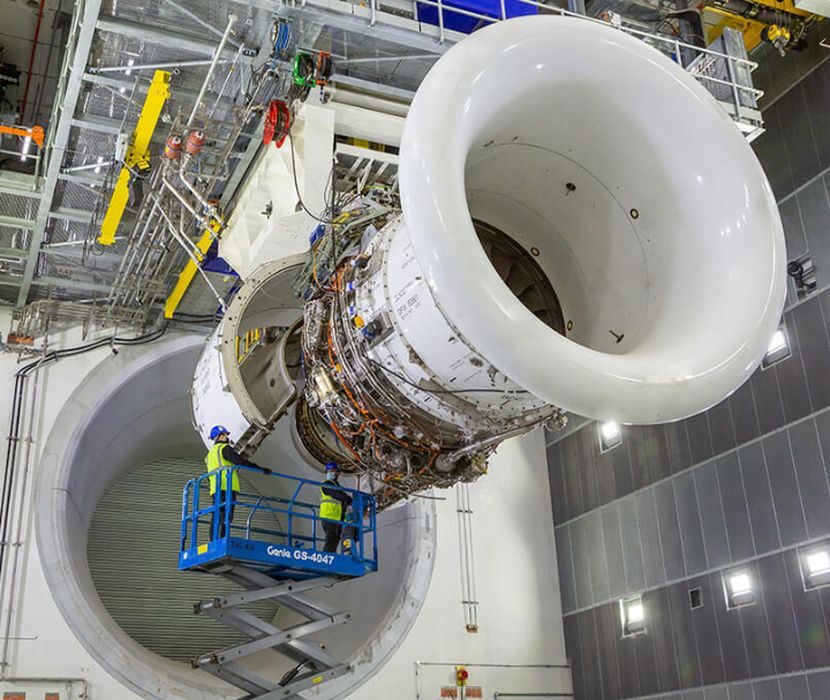
UltraFan has completed Phase 1 full-power tests (~85,000 lbf thrust) and is designed to be scalable across thrust classes. Rolls-Royce has emphasized its goal to re-enter the narrowbody segment and is reportedly seeking further investment (~£3 billion) to scale UltraFan.
Rolls-Royce, UltraFan, and Engine Strategy
UltraFan as the Propulsion Candidate
Rolls-Royce’s UltraFan demonstrator is its centerpiece engine technology program, explicitly designed to push fuel efficiency and sustainability forward. The UltraFan architecture features a large diameter fan, hybrid gear reduction, and advanced materials to deliver significant gains over current engines.
If Boeing were to select UltraFan (or a derivative) for its new narrowbody, it would represent a tectonic shift: supplanting CFM International—a stalwart narrowbody engine supplier—for a technology not yet in commercial use. But such boldness would also bring engineering and certification risk.
As of now, no public press release from Boeing or Rolls-Royce confirms that UltraFan is the engine for the successor program, though Rolls-Royce’s willingness to re-enter narrowbody engine contention is evident.
Additive Manufacturing in Rolls-Royce’s Engine Roadmap
Rolls-Royce is not a stranger to additive manufacturing (AM). Over the past decade, it has aggressively invested in 3D printing of engine components and structures, applying it to combustor modules, bearing housings, turbine elements, and structural parts.
A few relevant examples:
- In partnership with Siemens’ Materials Solutions, Rolls-Royce has begun collaborating on serial production of civil aerospace components via Metal Additive Manufacturing.
- As mentioned, the Manufacturing Technology Centre (MTC) in the UK and Rolls-Royce established a pre-production facility to produce Engine Section Stator (ESS) components for UltraFan using Electron Beam Melting (EBM) of titanium alloys.
- ITP Aero, a key Rolls-Royce partner, has already 3D printed a Tail Bearing Housing (TBH) as part of UltraFan’s demonstrator engine. That housing includes removable sound-attenuation panels made via Selective Laser Melting (SLM), targeting up to 50 % noise reduction.
- Rolls-Royce has patented additive-layer manufacturing methods for gas turbine fuel spray nozzles, featuring internal passages, metering features, and hybrid additive/subtractive finishing.
- In defense contexts, Rolls-Royce has converted retired RAF aircraft parts into metal powders, then used those for AM manufacture of a nose cone and compressor blades tested on Orpheus engines.
That said, none of these examples currently prove that the Boeing 737 MAX successor’s engine will be additively manufactured end-to-end. Instead, they demonstrate that Rolls-Royce is positioning additive as a viable path within its engine development portfolio.
Potential AM Application for Boeing’s Successor Engine
If Boeing indeed selects a Rolls-Royce engine, the new narrowbody program provides an opportunity to exploit additive manufacturing more aggressively than past designs allowed. Potential paths include:
- Blisks or integrally bladed rotors: these rotors combine disk + blades into one part, minimizing joints and improving aerodynamics. Some blisks are now fabricated via additive or hybrid means.
- Complex internal cooling passages in turbine or compressor blades—AM allows internal geometries not feasible with casting or forging.
- Fuel nozzles and combustor components: given Rolls-Royce’s own patent activity in AM fuel spray nozzles, it seems plausible that new combustor modules might be printed.
- Housing and stator sections (like Engine Section Stators) produced via EBM, as is being done now in UltraFan pre-production.
- Sound attenuation panels, acoustic liners, vibration-damping structures: ITP’s AM panels on the TBH already point to noise control opportunities.
- Material recyclability and circular economy flows: e.g., using recycled powders from retired aircraft as feedstock for some components, echoing the Tornado-to-jet initiative.
If Boeing’s successor jet becomes an anchor application for more aggressive additive use, it could accelerate acceptance of AM at high production rates in commercial aviation. But the scaling challenges (throughput, inspection, certification) are nontrivial.
Challenges, Unknowns, and Strategic Risks
- Certification and reliability: Aerospace regulators (FAA, EASA) remain cautious about full-scale additive adoption—especially for critical rotating parts. Any new design must pass rigorous fatigue, fracture, and damage tolerance regimes.
- Supply chain maturity: To support mass production volumes, supply chains for AM powders, post-processing, inspection, and material traceability must scale reliably. Rolls-Royce’s initiatives with Material Solutions (Siemens) hint at movement in this direction.
- Cost tradeoffs: Additive is advantageous for complex geometry and material savings, but overuse can lead to higher inspection and post-processing costs. Designs must justify AM over optimized traditional routes.
- Engine readiness risk: UltraFan is still demonstrator-stage; deploying it on a commercial narrowbody introduces timing risk. Boeing might hedge with alternate engine paths (GE, Pratt & Whitney) until maturity.
- Strategic alignment: Boeing must restore confidence in production quality and regulatory compliance before launching a major new program. A flawed rollout could compound the MAX legacy issues.
- Timing and competition: Airbus is already working on its successor A320 line, aiming for an engine decision around 2027 and service in the 2030s. Boeing must act decisively to avoid falling behind.
Vision: What the Successor Could Be
Although speculative, the successor to the 737 MAX may well adopt a configuration like this:
- Seating in the 180–220 range, targeting the middle of the market where the A321neo currently dominates
- High-aspect-ratio wing, potentially with folding tips or advanced aerodynamics (e.g. truss-braced wings considered in concept studies)
- Modern avionics and flight deck divorced from decades of 737 legacy constraints
- Powered by a Rolls-Royce-derived UltraFan-based engine, optimized for high efficiency and sustainability
- Selectively use additive-manufactured components in critical subsystems (stators, housings, acoustic panels, nozzles) to reduce weight, enhance performance, and shorten design cycles
- Designed for sustainable aviation fuels, hybrid-electric readiness, and modular upgrades over its lifecycle
If Boeing can execute this vision, it may reclaim lost ground with Airbus in the narrowbody market, while also pushing additive manufacturing from niche to backbone in jet propulsion.
Implications & Strategic Insight
Boeing’s willingness to talk to Rolls-Royce signals openness to alternate engine suppliers — potentially breaking long-term reliance on CFM International. But the discussions are exploratory. But, if Boeing picks UltraFan for the successor, the AM investments Rolls-Royce is making now could give them a technological edge—especially in weight, part integration, and design flexibility.
Additionally, the scaling of UltraFan to a “narrowbody class” places timing pressure: Rolls-Royce must mature the demonstrator, validate AM processes, and win Boeing’s (or another OEM’s) confidence before Airbus commits major orders for its own new aircraft.
The additive manufacturing capabilities being matured now (especially for ESS and TBH) may become test cases or proving grounds. If these parts pass rigorous fatigue/inspection protocols, they could pave the way for broader additive adoption in the successor’s propulsion line.
The Research and Development Tax Credit
The now permanent Research and Development (R&D) Tax Credit is available for companies developing new or improved products, processes, and/or software. 3D printing can help boost a company’s R&D Tax Credits. Wages for technical employees creating, testing, and revising 3D-printed prototypes can be included as a percentage of the eligible time spent for the R&D Tax Credit. Similarly, when used as a method of improving a process, time spent integrating 3D printing hardware and software counts as an eligible activity. Lastly, when used for modeling and preproduction, the costs of filaments consumed during the development process may also be recovered.
Whether it is used for creating and testing prototypes or for final production, 3D printing is a great indicator that R&D Credit-eligible activities are taking place. Companies implementing this technology at any point should consider taking advantage of R&D Tax Credits.
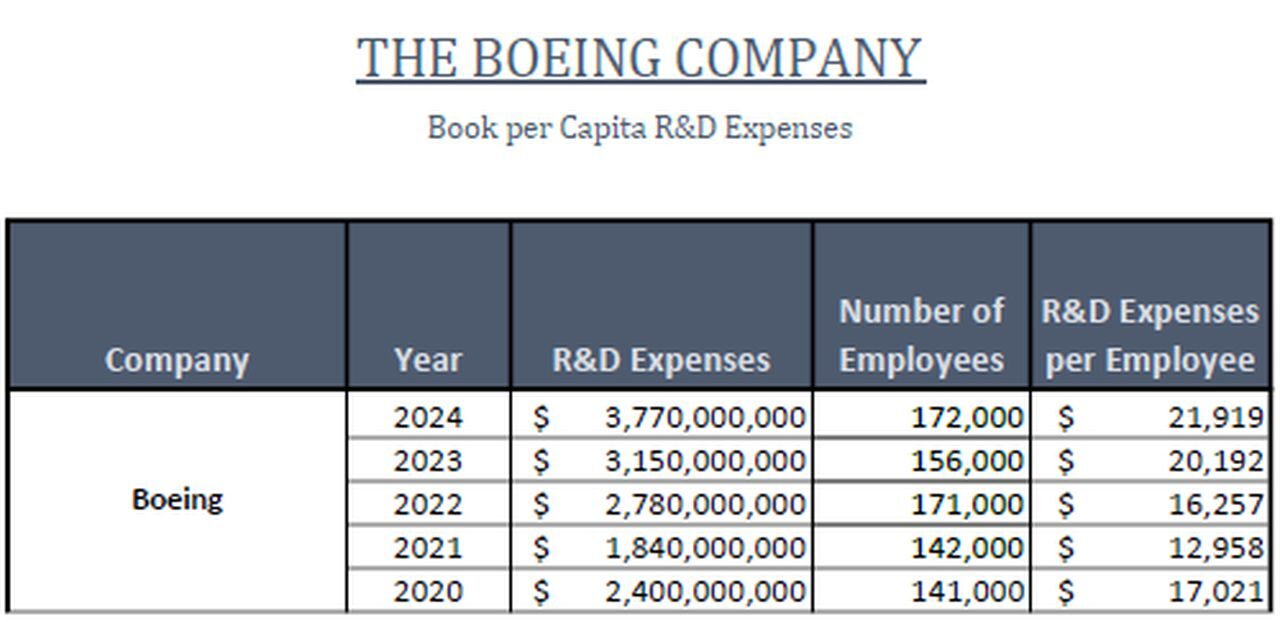
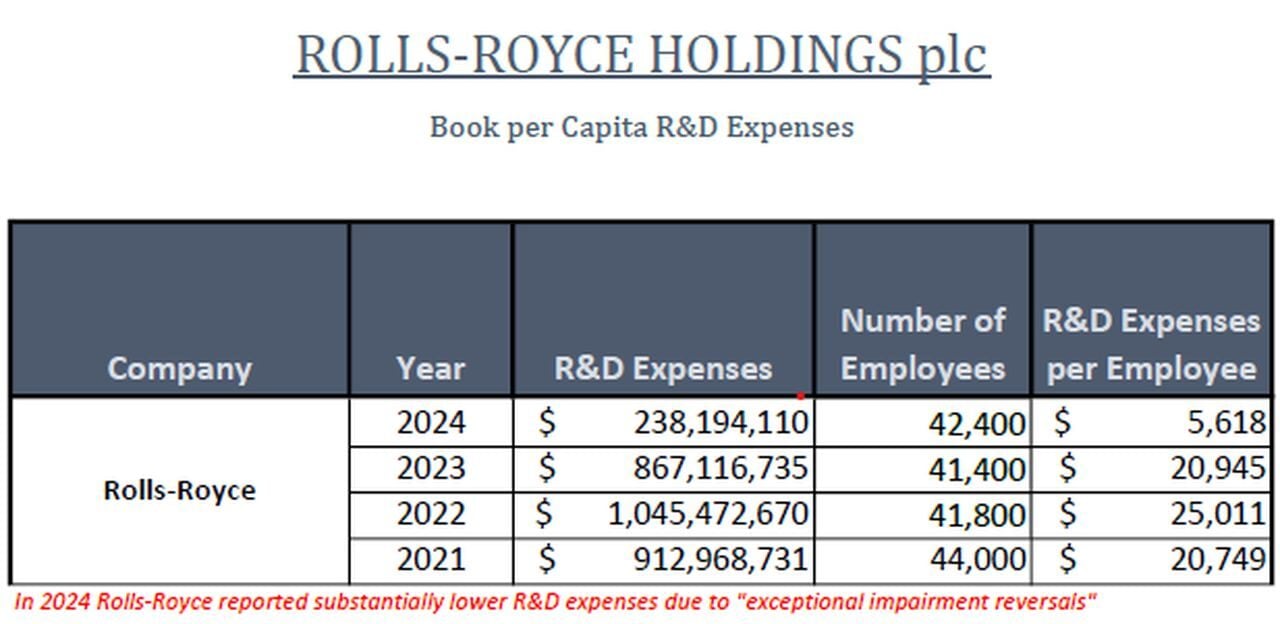
Below are tables that present the recent research and development investments that Boeing and Rolls-Royce have been making.
Conclusion
While Boeing’s 737 MAX successor remains unannounced and in conceptual incubation, the front-page WSJ coverage on September 30, 2025, marks a pivot point. Engagement with Rolls-Royce signals ambition to break from the status quo, especially if the UltraFan engine is selected. And because Rolls-Royce is already embedding additive manufacturing into its engine development roadmap, Boeing’s next narrowbody might be the commercial aircraft where AM finally realizes its full disruptive potential.
Still, the gaps remain wide: no public confirmation from Boeing or Rolls-Royce has yet tied additive to the successor program; engine readiness, risk mitigation, and certification hurdles all loom. What is clear is that Boeing—and the broader industry—are entering a new frontier where additive manufacture is no longer a curiosity, but a potential enabler of the next generation.
Lastly, planning a new aircraft enables a whiteboard approach where they should be able to use 3D printing for generative design and perhaps production components at both the Boeing level and for their entire tier supply chain.