
Charles R. Goulding and Aaron Rofe examine how US Forged Rings’ massive North Carolina investment signals a new era of vertically integrated, US-based manufacturing.
US Forged Rings Inc. (USFR) is advancing its push into domestic manufacturing with a major new investment in Hertford County, North Carolina. Announced in February 2026, the project represents a planned investment of up to US$875 million and marks a significant step in the company’s effort to establish a fully integrated, US-based supply chain for critical steel components. The development builds on USFR’s earlier 2024 plans to support offshore wind manufacturing, but the scope has since expanded to include a broader range of industrial and energy application, signaling a shift from concept to large-scale execution.
The Hertford County facility will be developed in three phases, with the first two phases expected to create at least 625 full-time jobs, and total employment projected to exceed 700 positions as the project reaches full scale. Average wages are expected to surpass US$80,000 annually, well above regional benchmarks, reinforcing the project’s economic significance. Development timelines indicate phase completion between 2028 and 2030, with the site functioning as a manufacturing hub for specialty steel products, including large-diameter forgings, tubular components, and complex fabricated structures used across industries such as power generation, construction, shipping, mining, defense, and aerospace.
A defining feature of the project is its strategic location adjacent to Nucor Steel’s existing operations in Hertford County, enabling a tightly integrated supply chain for steel production and processing. USFR maintains a supply chain partnership with Nucor, allowing it to source domestically produced steel while reducing transportation costs and logistical complexity. The site also benefits from direct access to the Chowan River and Intracoastal Waterway, along with rail connectivity via the North Carolina & Virginia Railroad, all of which are essential for transporting oversized industrial components. This co-location strategy supports USFR’s broader objective of producing components entirely within the United States, helping customers mitigate risks associated with global supply chain disruptions and shifting trade dynamics.
The investment reflects a broader effort to strengthen domestic manufacturing capacity at a time when demand for large-scale steel components is increasing across multiple sectors. Historically, many of these components – particularly those used in offshore wind and heavy infrastructure – have been imported from overseas, leading to long lead times and cost volatility. By developing integrated forging and fabrication capabilities domestically, USFR is positioning itself to provide a more reliable and predictable supply of critical components, particularly as the US continues to expand energy infrastructure tied to renewables, data centers, and grid modernization.
The shift toward domestic production aligns with larger reshoring trends reshaping the American metals industry. In recent years, the Southeastern United States has emerged as a key hub for industrial growth, attracting substantial investment in steel production, fabrication, and advanced manufacturing. This trend is particularly evident in regions such as Birmingham, Alabama, where renewed investment and close coordination between steel producers, service centers, and advanced manufacturing firms have helped establish a highly interconnected metals ecosystem. The region’s combination of lower operating costs, strong transportation infrastructure, and an experienced workforce continues to support this expansion, with producers, processors, and manufacturers operating in close proximity. Within this context, USFR’s investment represents a natural extension of broader regional expansion in steel and infrastructure-related manufacturing.
This growing industrial ecosystem is also creating new opportunities for additive manufacturing and advanced fabrication technologies. Recent developments across the Southeast highlight how 3D printing is increasingly being integrated into both industrial workflows and engineering environments, helping bridge the gap between design, prototyping, and full-scale production. In the nuclear sector, partnerships between companies such as Nucor and advanced energy developers are beginning to pair certified domestic steel production with digitally coordinated manufacturing systems, laying the groundwork for more scalable and flexible production methods. These efforts demonstrate how combining material supply with digital coordination can reduce bottlenecks and improve production efficiency across complex infrastructure projects.
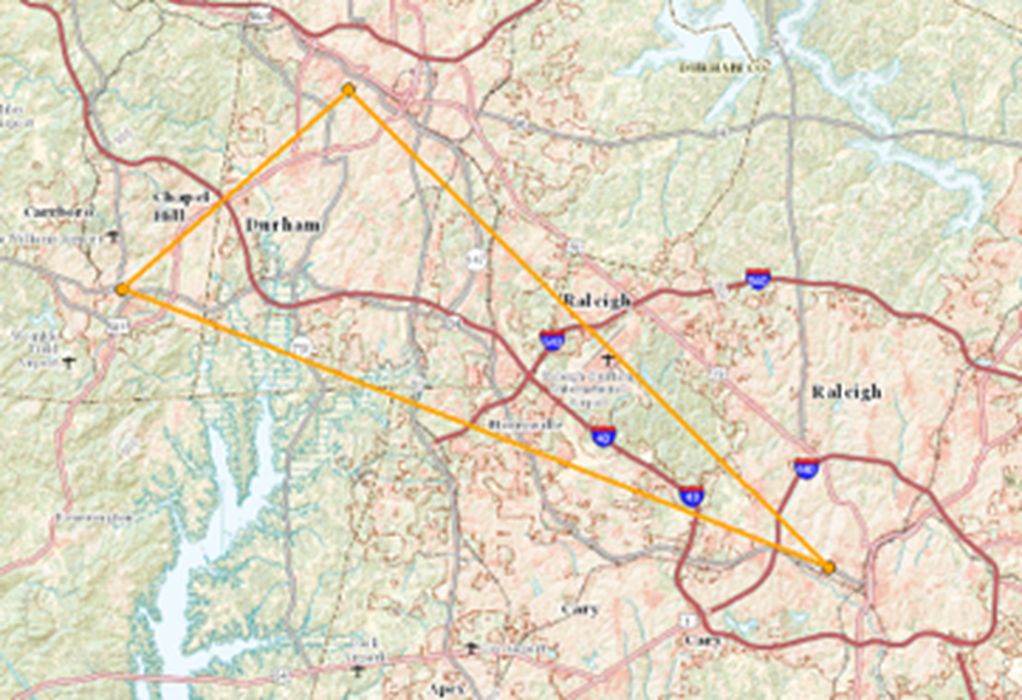
At the same time, North Carolina’s Research Triangle is emerging as a complementary innovation hub where universities are expanding access to 3D printing and advanced fabrication tools. At Duke University, a rapidly growing network of 3D printers has enabled hundreds of students to engage in rapid prototyping and product development, supported by centralized systems that manage thousands of print jobs across multiple machines. Similarly, the University of North Carolina’s BeAM makerspace network provides access to 3D printing, metalworking, and other fabrication tools that support hands-on engineering, research, and entrepreneurship. By integrating additive manufacturing alongside traditional fabrication methods, these programs are helping to train a workforce capable of operating across both digital and physical production environments.
Together, these developments point toward a future in which traditional manufacturing and additive processes increasingly coexist. Large-scale facilities like USFR’s provide the material backbone and production scale, while emerging digital and additive technologies offer new ways to design, customize, and produce components more efficiently. As these capabilities converge, the Southeast is positioning itself not just as a center for steel production, but as a next-generation manufacturing ecosystem that combines heavy industry with advanced technology.
State and local governments have also played a role in supporting the project through targeted infrastructure investments designed to accommodate heavy industrial activity. Planned improvements include a public dock along the Chowan River and roadway upgrades capable of handling large industrial loads, both of which are critical for moving massive forged components. In parallel, workforce development initiatives and partnerships with regional institutions are expected to help supply the skilled labor required for advanced steel manufacturing operations.
While USFR’s initial strategy focused heavily on offshore wind, the company’s expanded plans reflect a more diversified approach driven by growing demand across multiple industries. In addition to wind energy, the facility is expected to support applications in nuclear power, industrial processing, defense, and aerospace, all of which require high-performance forged and fabricated steel components. This diversification reduces reliance on any single market while positioning the company to capitalize on long-term infrastructure and energy investment trends.
The Research & Development Tax Credit
The now-permanent Research & Development Tax Credit (R&D) is available for companies developing new or improved products, processes and/or software.
3D printing can help boost a company’s R&D Tax Credits. Wages for technical employees creating, testing and revising 3D printed prototypes can be included as a percentage of eligible time spent for the R&D Tax Credit. Similarly, when used as a method of improving a process, time spent integrating 3D printing hardware and software counts as an eligible activity. Lastly, when used for modeling and preproduction, the costs of filaments consumed during the development process may also be recovered.
Whether it is used for creating and testing prototypes or for final production, 3D printing is a strong indicator that R&D-eligible activities are taking place. Companies implementing this technology at any point should consider claiming R&D Tax Credits.
Conclusion
Ultimately, US Forged Rings’ North Carolina project represents more than a single manufacturing facility; it reflects a broader shift toward vertically integrated, domestically anchored production in the U.S. metals sector. As construction progresses over the coming years, the project will serve as an important indicator of how effectively large-scale steel manufacturing can be reshored to support the next generation of American energy and industrial development.