
Charles R. Goulding and Nimra Shakoor examine how JetZero is combining advanced materials, 3D printing, and AI to reshape aircraft production and fuel efficiency.
JetZero is a new airplane manufacturing concept characterized as a disruptor. The company has secured a billion dollars in funding commitments, including US$235 million from the Department of Defense. The first blended-seat aircraft is planned for completion in 2027. The Series B funding round included leading industry investors such as B Capital, United Airlines Ventures, Northrop Grumman, 3M Ventures, and RTX Ventures (JetZero).
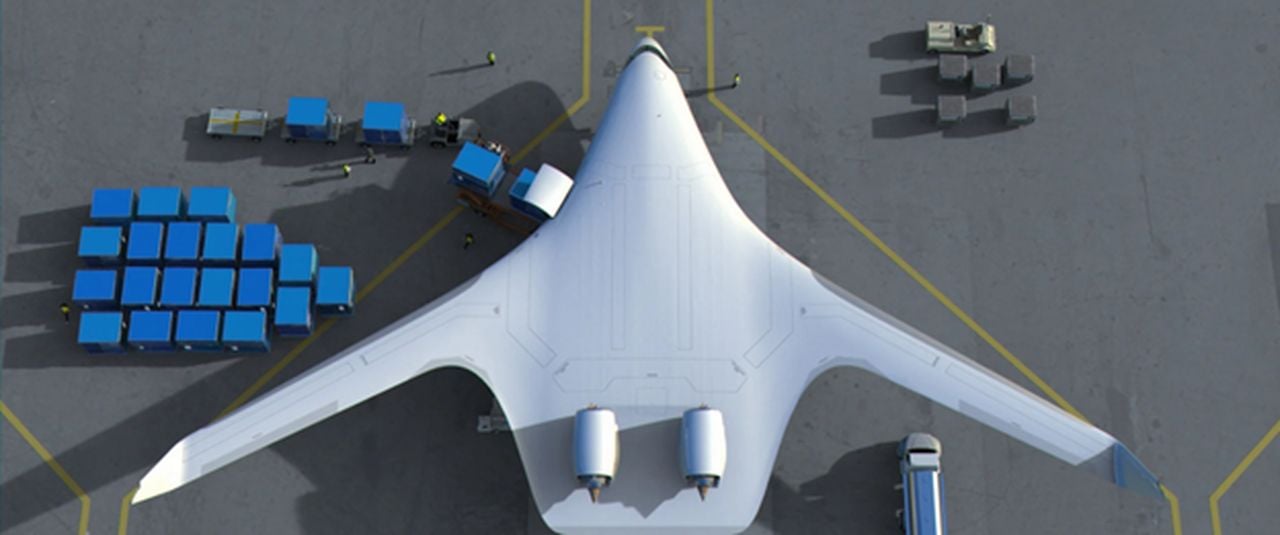
The JetZero plane presents an entirely new aircraft concept with an integrated wing-and-fuselage structure. The design will significantly reduce fuel consumption and incorporates many state-of-the-art materials and composite technologies.
The North Carolina Manufacturing Plant
JetZero has selected Piedmont Triad International Airport in Greensboro, North Carolina, for its new production facility. The company plans to build its Z4 “all-wing” airplane at the site, with reports projecting nearly 15,000 jobs—making it the largest job announcement in North Carolina’s history (EDPNC).
The project will require over US$4.7 billion in capital, with construction set to begin in early 2026. JetZero will join other aerospace companies, including Boom Supersonic and Honda Aircraft Company, at Piedmont Triad, further establishing North Carolina as an aerospace hub.
Additive Manufacturing & Digital Engineering Partnership
Additive manufacturing is expected to play a central role in JetZero’s planned North Carolina production facility for its Z4 blended wing body aircraft. The Piedmont Triad International Airport has stated that JetZero’s “Factory of the Future” will incorporate AI and 3D printing to enable faster production, improve quality, and strengthen the domestic supply chain (Piedmont Triad International Airport).
The role of additive manufacturing will likely extend beyond limited prototyping into broader production applications. Siemens—a partner in JetZero’s aircraft program—has extensive experience in industrial-scale additive manufacturing, using it to produce complex components, reduce material waste, and enable advanced geometries that are not feasible with traditional manufacturing methods (Siemens). Through its partnership with JetZero, Siemens is expected to support the integration of these capabilities into both development and production workflows (Siemens Press).
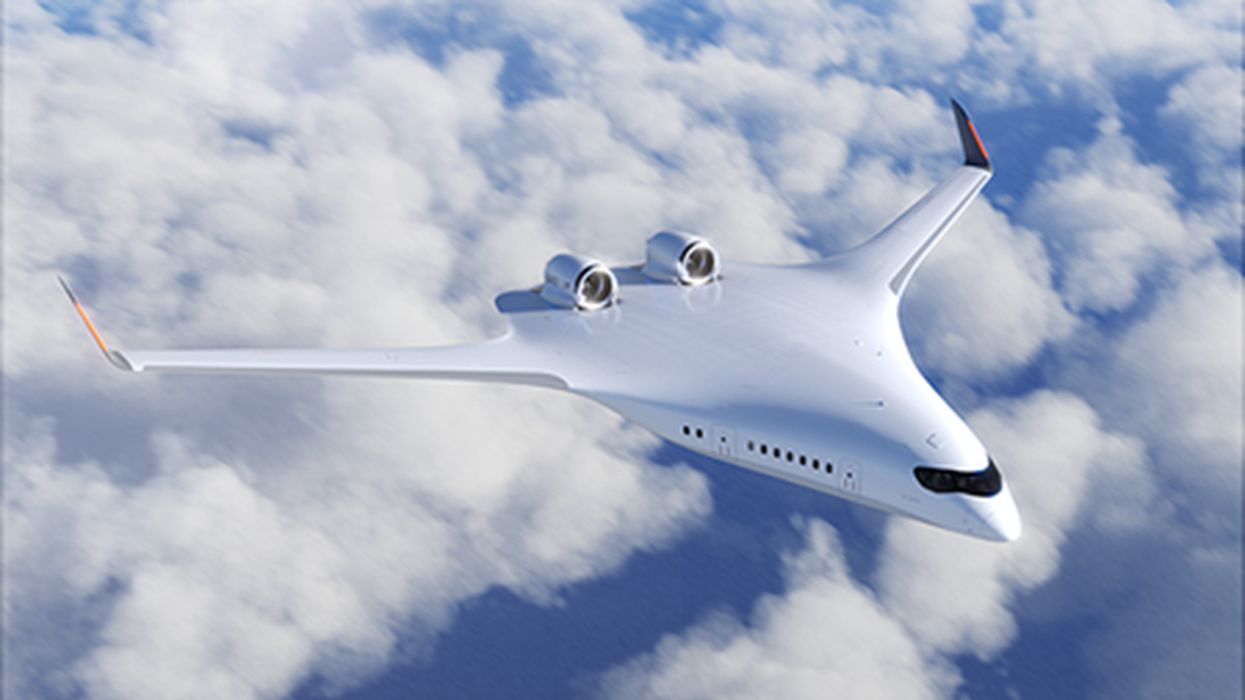
In parallel, Siemens provides a digital engineering ecosystem centered on digital twin technology, which complements additive manufacturing by enabling a fully virtualized design and production process. A digital twin creates a continuously updated virtual model of the aircraft and its components, allowing engineers to simulate performance, validate designs, and refine manufacturing processes before physical production begins. This is particularly relevant for additive manufacturing, where build parameters and material behavior can be iteratively optimized in a virtual environment prior to fabrication.
Together, additive manufacturing and digital twin technology enable a more integrated development cycle where components are designed, tested, and optimized digitally, then produced with high precision using 3D printing. This approach supports faster iteration, reduced development risk, and more efficient scaling from design through production.
The Research & Development Tax Credit
The now-permanent Research & Development Tax Credit (R&D) is available for companies developing new or improved products, processes and/or software.
3D printing can help boost a company’s R&D Tax Credits. Wages for technical employees creating, testing and revising 3D printed prototypes can be included as a percentage of eligible time spent for the R&D Tax Credit. Similarly, when used as a method of improving a process, time spent integrating 3D printing hardware and software counts as an eligible activity. Lastly, when used for modeling and preproduction, the costs of filaments consumed during the development process may also be recovered.
Whether it is used for creating and testing prototypes or for final production, 3D printing is a strong indicator that R&D-eligible activities are taking place. Companies implementing this technology at any point should consider claiming R&D Tax Credits.
Industry Disruption in Aerospace
JetZero’s North Carolina production facility and its blended wing body (BWB) aircraft program represent an attempt to fundamentally reshape conventional aircraft manufacturing approaches. By combining advanced design methods, digital engineering, and automated production techniques, the project is streamlining how next-generation aircraft are developed and built at scale. In this sense, it parallels the Hadrian initiative, which also applies advanced manufacturing techniques and industrial-scale 3D printing within highly automated facilities to produce critical defense components, including those for Virginia-class and Columbia-class submarines. Hadrian’s facility is also described as a “Factory of the Future,” reflecting a similar emphasis on highly automated, digitally enabled production systems for defense manufacturing (United States Navy).
Together, these efforts underscore a broader shift in aerospace and defense toward more integrated, digitally enabled production systems that reduce reliance on traditional manufacturing constraints and support faster, more scalable development and delivery.