Charles G. Goulding explores why the world’s latest “miracle” superalloys rarely replace steel overnight and how additive manufacturing is reshaping the path from laboratory breakthrough to commercial success.
The Annual Promise of the Metal That Changes Everything
Every year or two, the materials world gets another headline announcing that steel’s reign is finally coming to an end.
Sometimes it’s the strongest alloy ever developed. Sometimes it’s the toughest. Occasionally it’s both, while also being lighter than aluminum, happier at volcanic temperatures and apparently destined for everything from jet engines to lunar bases. The accompanying illustrations are usually impressive. Rockets fly farther. Aircraft become lighter. Power plants become more efficient. Somewhere in the distance, a bridge looks optimistic.
To be fair, these breakthroughs are usually real. Researchers often do discover materials with genuinely remarkable properties. The problem isn’t the laboratory result. It’s everything that comes afterward.
A useful engineering material has a surprisingly long job description. It has to survive heat, cold, vibration, corrosion, fatigue, impacts and years of abuse by people who are paid to assume the worst. It also has to be produced consistently. Performing well in a polished laboratory sample is only the start.
There is also an annoying habit shared by many breakthrough materials: they solve one problem while quietly introducing another. Greater strength may come with lower ductility, or better high-temperature performance may come with poor machinability.
Then there is steel itself. Referring to “steel” understates the competition. Steel is not a single material but an enormous family of alloys refined over more than a century. Engineers know how to predict how it will behave decades into the future. Replacing steel doesn’t mean beating one tensile-strength number in a journal article. It means outperforming generations of accumulated manufacturing knowledge.
The manufacturing process is where many wonder alloys end up failing. An alloy that performs beautifully in a laboratory specimen may crack during casting, separate into unwanted phases while cooling or become extraordinarily expensive to machine. Others depend on elements like scandium, tantalum or cobalt that make accountants noticeably less enthusiastic than researchers.
And then comes qualification. Industries like aerospace, nuclear energy and medical devices do not adopt new materials because the microscopy photographs looked convincing. They need years of evidence showing that every batch can be produced consistently, every defect can be detected and every finished component will perform exactly as expected. Additive manufacturing raises the bar even further because a printed alloy’s properties depend not only on its chemistry, but also on many other process variables. In other words, engineers are certifying an entire manufacturing ecosystem.
History suggests that this is perfectly normal. Titanium never replaced steel, but it became indispensable in aircraft and medical implants. Nickel superalloys didn’t conquer the materials world either. They quietly transformed gas turbines, where their unique combination of high-temperature strength and creep resistance justified every additional dollar.
Yesterday’s Miracle Metals: Where Are They Now?
Every few years, one alloy appears destined for greatness. Laboratory testing produces remarkable numbers, and headlines proclaim the arrival of a revolutionary material. Ten years later, however, the question is: what happened?

The answer is rarely binary. Some materials quietly disappear from public view. Others continue to mature in laboratories without finding large commercial markets. A handful eventually become successful—but usually in applications far narrower than originally imagined.
| Alloy | Original Promise | Where It Stands Today | Lesson |
| SAM2X5-630 (2016) | Record-breaking amorphous steel with unprecedented resistance to permanent deformation. Proposed for armor, satellites and impact-resistant structures. | The remarkable laboratory results remain well documented, but the alloy itself has seen little visible commercial adoption. Bulk metallic glasses continue to find niche applications, but not the sweeping structural uses initially envisioned. | Exceptional mechanical properties alone cannot overcome difficult processing, limited ductility and manufacturing challenges. |
| CrCoNi Medium-Entropy Alloy (2016–2022) | Described as possessing some of the highest combinations of strength, ductility and fracture toughness ever measured, particularly at cryogenic temperatures. | Still an active research material with continuing advances, but largely absent from commercial products. Its greatest advantages remain confined to specialized environments rather than general structural applications. | Even extraordinary performance must justify high material costs and survive industrial qualification. |
| Scalmalloy | Aluminum alloy engineered specifically for additive manufacturing, offering titanium-like strength with aluminum’s low weight. | Unlike many highly publicized alloys, Scalmalloy developed into a genuine commercial material with aerospace, motorsports and robotics applications. Production capacity continues to expand. | Designing an alloy around additive manufacturing, rather than adapting it afterward, may dramatically improve its commercial prospects. |
One pattern emerges almost immediately. None of these materials failed because researchers mismeasured their properties. Their published data remain impressive. Instead, each encountered a different version of the same question: can industry actually build things from it, repeatedly, economically, and with enough confidence to certify critical components?
SAM2X5-630 illustrates the classic trajectory. The alloy genuinely demonstrated extraordinary impact resistance through its unusual partially amorphous structure, generating speculation about everything from body armor to spacecraft shielding. Yet a decade later, it has become more of a scientific reference point than a manufacturing material. The problem was producing larger components while preserving the delicate microstructure responsible for its remarkable behavior.
CrCoNi represents a different story. It has not faded from research at all. Quite the opposite: scientists continue refining its microstructure and reporting remarkable combinations of strength and toughness. What it has not yet found is its defining commercial application. The alloy’s most spectacular performance occurs under cryogenic conditions, suggesting that its future may lie not in replacing steel generally, but in solving a handful of very expensive problems, for instance in space systems or fusion energy.
Scalmalloy offers the exception that proves the rule. Rather than asking manufacturers to adapt an existing breakthrough alloy, it was engineered from the outset for laser powder-bed fusion. Its success owes as much to process design as to chemistry. The powder, printing parameters, post-processing and target applications were developed together, reducing many of the manufacturing obstacles that have slowed earlier wonder materials.
That distinction is important. Historically, researchers discovered a remarkable alloy first and only later attempted to manufacture useful components from it. Additive manufacturing increasingly allows those two activities to occur simultaneously.
Realistic Expectations for the Future
If history is any guide, the next breakthrough alloy will not begin by replacing steel in skyscrapers, automobiles or pipelines. It will begin somewhere much smaller.
New materials almost always enter markets where performance matters far more than raw material cost. Production volumes are modest, individual components are expensive, and even small improvements in weight, temperature capability or service life can justify a significant premium. These same characteristics also happen to describe many of the industries that have embraced additive manufacturing most aggressively. McKinsey has similarly observed that additive manufacturing has gained the greatest traction in engineering-intensive, high-value, low-volume sectors.
| Industry | Why It Is an Early Adopter | Why Additive Manufacturing Helps | Likelihood |
| Rocket engines and launch systems | Every kilogram saved improves payload capacity, while engines routinely encounter temperatures and stresses near the limits of existing materials. Production volumes remain relatively small, making expensive alloys economically feasible. | Complex cooling channels, integrated assemblies and rapid design iteration have already made metal AM commonplace in launch vehicles. | Excellent |
| Gas turbines and jet engines | Modern turbine efficiency depends on operating at ever higher temperatures, making incremental improvements in creep resistance and oxidation performance extremely valuable. | AM enables intricate internal cooling passages and reduces the number of separately manufactured components. Aerospace remains one of the most mature AM markets. | Excellent |
| Fusion and advanced nuclear | Components must survive combinations of heat, neutron exposure and mechanical loading rarely encountered elsewhere. Materials, rather than engineering design, are often the limiting factor. | AM allows rapid development of specialized geometries and replacement parts without requiring high production volumes. | Very High |
| Semiconductor manufacturing equipment | Wafer-processing equipment demands exceptional dimensional stability, corrosion resistance and thermal management. Even modest improvements can affect manufacturing yield. | Precision cooling channels, lightweight structures and low-volume production align naturally with metal AM. | Very High |
| Hypersonic and defense systems | Vehicles experience severe aerodynamic heating and thermal cycling while production numbers remain relatively limited. | Highly optimized internal geometries and rapid design changes favor additive production. | High |
| Medical implants | Although strength alone is rarely the principal requirement, corrosion resistance, fatigue performance and biocompatibility create opportunities for specialized alloys. | Patient-specific geometries are already one of additive manufacturing’s most successful commercial applications. | Moderate |
| Automotive and construction | These sectors consume enormous quantities of material, making even small increases in alloy cost commercially significant. Existing steels already perform remarkably well. | AM remains useful for tooling and specialty components but struggles to compete economically in mass production. | Low (at least initially) |
One feature unites nearly every promising application: none requires replacing steel. Instead, each asks the new alloy to solve a problem that existing materials solve imperfectly. Rocket engines benefit from higher operating temperatures. Turbine manufacturers seek longer component life. Semiconductor manufacturers want tighter thermal control. Fusion developers need materials capable of surviving conditions that conventional alloys simply were not designed to endure.
Those same markets also happen to favor additive manufacturing. metal 3D printing excels where production runs are small. Researchers increasingly argue that this is leading to a new philosophy in alloy development: instead of adapting conventional alloys to additive manufacturing, engineers are beginning to design alloys specifically for the unique thermal conditions created during printing.
The Monash Alloy: A Different Kind of Wonder Material
The latest entrant into the wonder-alloy conversation comes from Monash University in Australia. On paper, the numbers are difficult to ignore. Researchers produced an alloy composed of titanium, hafnium, tantalum, niobium and zirconium that achieved a yield strength over 2 gigapascals—roughly twice that of conventional steel—while maintaining meaningful ductility.
The more interesting part of the research, however, may not be the alloy itself. It may be how the researchers produced it. Historically, metallurgists have searched for better materials largely by experimenting with different combinations of elements. The Monash team took a somewhat different approach. Rather than relying solely on chemistry, they focused on how the atoms arranged themselves during processing. By heating the alloy more slowly and at lower temperatures, they encouraged the atoms to form what they describe as an unusually ordered, interconnected structure with relatively few defects. In other words, the breakthrough may owe as much to the alloy’s internal architecture as to its chemical composition.
If the Monash results hold up outside the laboratory, the first applications are unlikely to be everyday products. History suggests that new materials usually begin in industries where performance matters more than price.
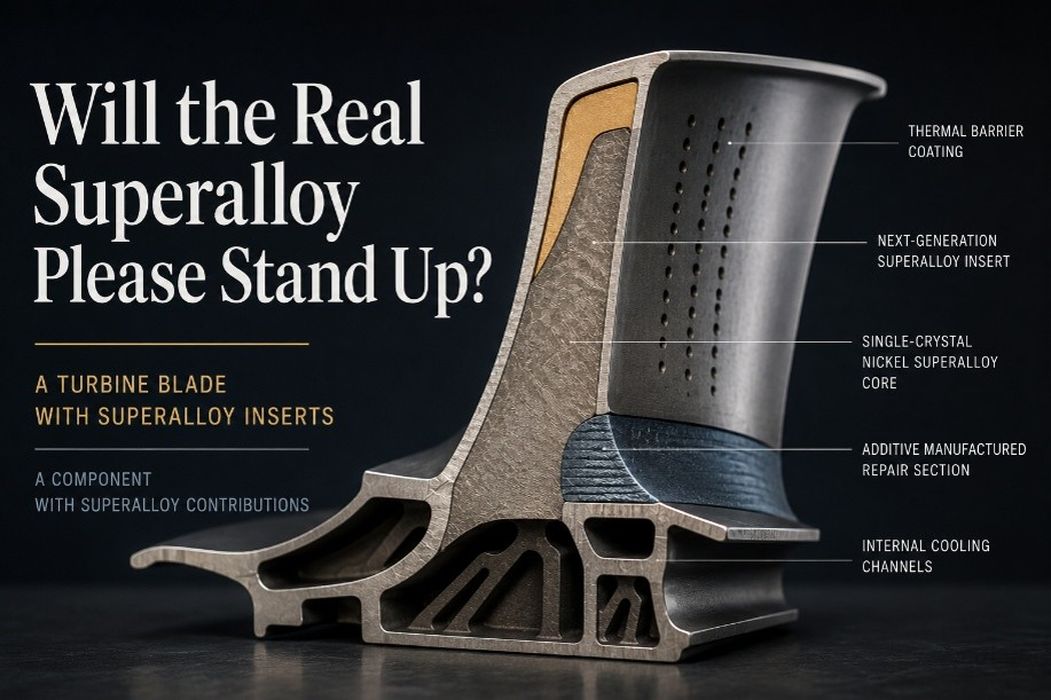
Space is an obvious candidate. Every pound saved on a rocket can increase the amount of cargo it carries, while engines routinely operate under temperatures and stresses that push today’s materials to their limits. Jet engines face similar challenges. Even small improvements in the metals used for turbine components can improve fuel efficiency or extend the time between maintenance.
Other possibilities include fusion energy, advanced nuclear reactors and hypersonic aircraft, all of which are searching for materials that can survive conditions conventional alloys struggle to endure.
An even less obvious possibility is semiconductor manufacturing. The machines used to make computer chips must operate with extraordinary precision while managing significant heat. A stronger, more stable alloy could eventually find its way into these high-end manufacturing systems, where reliability is often more important than the cost of the material itself.
Of course, impressive laboratory results are only the beginning. Before the Monash alloy appears in any commercial product, researchers will need to show that it can be manufactured consistently, produced economically and perform reliably over years of real-world use. The alloy also contains relatively expensive elements, including hafnium and tantalum, raising additional questions about cost and supply that only commercial production can answer.
Still, the Monash work hints at something larger than a single promising alloy. Previous breakthroughs often focused on finding a better chemical recipe. This research suggests that how atoms arrange themselves during manufacturing may be just as important as which elements are mixed together. If that idea proves correct, the most significant legacy of the Monash research may not be one remarkable alloy, but a new way of designing the next generation of materials.
The Research & Development Tax Credit
Enacted in 1981, the now permanent Federal Research and Development (R&D) Tax Credit allows a credit that typically ranges from 4%-7% of eligible spending for new and improved products and processes.
Qualified research must meet the following four criteria:
- Must be technological in nature
- Must be a component of the taxpayer’s business
- Must represent R&D in the experimental sense and generally includes all such costs related to the development or improvement of a product or process
- Must eliminate uncertainty through a process of experimentation that considers one or more alternatives
Eligible costs include U.S. employee wages, cost of supplies consumed in the R&D process, cost of pre-production testing, U.S. contract research expenses, and certain costs associated with developing a patent.
On December 18, 2015, President Obama signed the PATH Act, making the R&D Tax Credit permanent. Since 2016, the R&D credit has been used to offset Alternative Minimum Tax (AMT) for companies with revenue below US$50 million. And, now, pre-profitable and pre-revenue startup businesses can also obtain up to US$500,000 per year in payroll tax offsets and cash rebates for up to five years.
Superalloys on Demand
For most of history, discovering a new alloy has been a slow process. Researchers proposed a promising combination of elements, produced small samples, tested their properties and repeated the cycle, often for years. Even successful discoveries represented a fraction of the materials that might have been possible.
That process is changing as artificial intelligence allows researchers to evaluate larger numbers of alloys than ever before. Instead of relying primarily on trial and error, machine-learning models can speedily identify promising combinations of elements. Automated laboratories can then evaluate those materials far more quickly as well.
The result may be a future where new alloys are far more common. Rather than waiting years for a breakthrough, engineers could have access to a growing library of specialized materials, each designed to solve a problem. Instead of searching for one alloy that does everything well, manufacturers may increasingly select from alloys optimized for extreme temperatures, corrosive environments, exceptional strength, low weight or combinations of properties that would have been impractical to develop only a decade ago.
Ironically, that future would make the challenge of commercialization even more important. Discovering a remarkable alloy is valuable only if someone can manufacture it consistently; related concerns then include certification and the surrounding product ecosystem. If artificial intelligence dramatically increases the number of promising materials, industry will still have to determine which ones deserve the enormous investment required to move from laboratory curiosity to commercial reality.
The Monash alloy may ultimately become one of those success stories—or it may simply be one of the earliest examples of a much larger shift. Maybe the next decade will be remembered for producing a revolutionary material. Or maybe it will be remembered for making extraordinary materials far less extraordinary.
Charles G. Goulding is a practicing attorney.